I’ve got this nifty chart… but what can I do with this information?
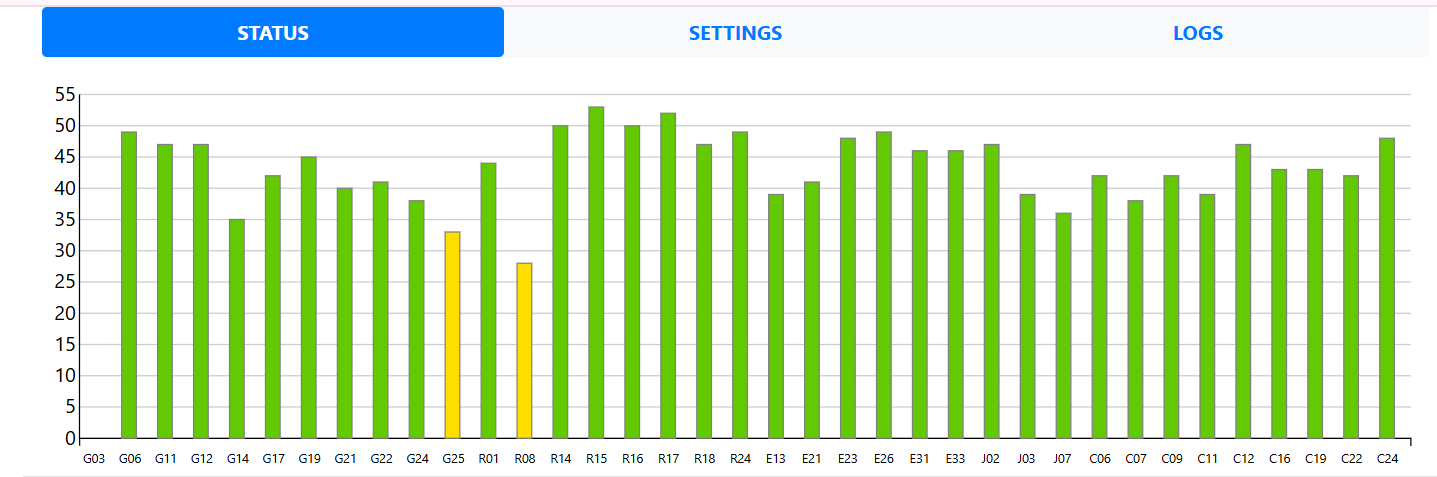
If I remember it right, more than 12 satelites over 40 is enought, or something like that.
This needs a bump for someone in the know to deliver an answer to.
norths reply seems to align with the results I’m getting 
But yeah… just for the sake of discussion it would be nice to know more
To record the position, at least 4 satellites are needed: 3 for the position and 1 to correct the clock error. I
Perhaps his site might help: https://www.ardusimple.com/gps-gnss-antenna-installation-guide/
1 Like
You need 4 satellites minimum to position on a 3d puzzle.
To be useful for RTK, individual satellites must be visible both the base station antenna and the rover antenna at the same time. A tree/building/hill/etc can block the rover from seeing one or more of the satellites the base can see, rendering it temporarily unuseful. So the more satellites the base can see, the better the chance that it will still see at least four satellites that the rover can see too.
Theoretically there should be 8 satellites in each constellation that are visible to any place on earth at any point in time. In practice this can vary a bit as they keep moving about the earth. That is assuming that there aren’t any local obstructions blocking the antenna’s view of the sky. Just the satellites which aren’t bellow the horizon. So etines it’s under 8 and other times it’s over.
The more of those satellites you see on that chart, the better the chances are that you will see at least 4 which the rover antenna can see too.
I think that you can’t mix and match satellites between constellations though, so the antenna needs to see at least 4 GPS satellites to get a GPS position and at least 4 Galaleo satellites to get a Galaleo position.
It’s all about having enough redundancy that you don’t run out of enough satellites that both the base and rover can see together.
At the moment that chart was taken, you can clearly see 9 GPS, 6 Glonass, 6 Galileo, 3 QZSS and 9 Beidou satellites with green bars. This implies that your base antenna does have a fairly good view of the sky, seeing more than 8 satellites on some constellations. Do not bother sending any RTCM data for the Japanese QZSS satellites though, you can’t see enough of them to be useful.
Check that chart a few times over several days. All those numbers will go up and down a bit. If you get periods where you don’t see at least 8 satellites on at least one constellation at any one point in time then consider moving the antenna to get a better view of the sky.
What you have there though should be fine for seeing enough satellites.
Actually 5 satellites is the minimum for RTK (initial) fix. This is very theoretical though because the geometry must be good too.
Another quality criterion for a good base is “a few satellites above 50 dB”. I believe in practise the levels are fine as long as the antenna cable not too long and a decent antenna is used. Unobstructed sky visibility in all directions is probably more difficult to achieve in practise (rather than sufficient signal levels).